Feng Shui
Feng Shui & The Elemental Lens
Feng Shui, the ancient Chinese art of spatial harmony, is more than just a method for placing furniture — it’s a way of tuning your environment to reflect and support your evolution.
At its heart are the five elements — Wood, Fire, Earth, Metal, and Water — each carrying a distinct frequency, function, and emotional resonance. Together, they create a language of balance that, when translated into your home, has the power to shift stuck energy, quiet mental noise, and unlock new momentum.
Whether you're seeking clarity, creativity, healing, or direction, Feng Shui offers a simple truth: Your home is a mirror. Change your space, and your inner world follows.
The Elements in Feng Shui: A Living Reflection
Each element holds a role in your life — a metaphor and a medicine. When one becomes dominant or neglected, imbalance follows. The practice of Feng Shui is not just design; it’s discernment — a daily awareness of what’s calling for nourishment, what’s overgrown, and what’s been left in the dark.
Here’s how to understand the five elements in your home and within yourself:
✧ Wood – Growth, Vision, Expansion
Brings: creativity, momentum, new beginnings
Looks like: plants, vertical lines, green/teal tones, natural materials
If lacking: you may feel stuck, indecisive, or disconnected from goals
✧ Fire – Passion, Energy, Visibility
Brings: vitality, recognition, warmth
Looks like: candles, lights, triangular shapes, red tones
If lacking: you might feel unseen, uninspired, or emotionally dim
✧ Earth – Stability, Grounding, Support
Brings: nourishment, trust, connection
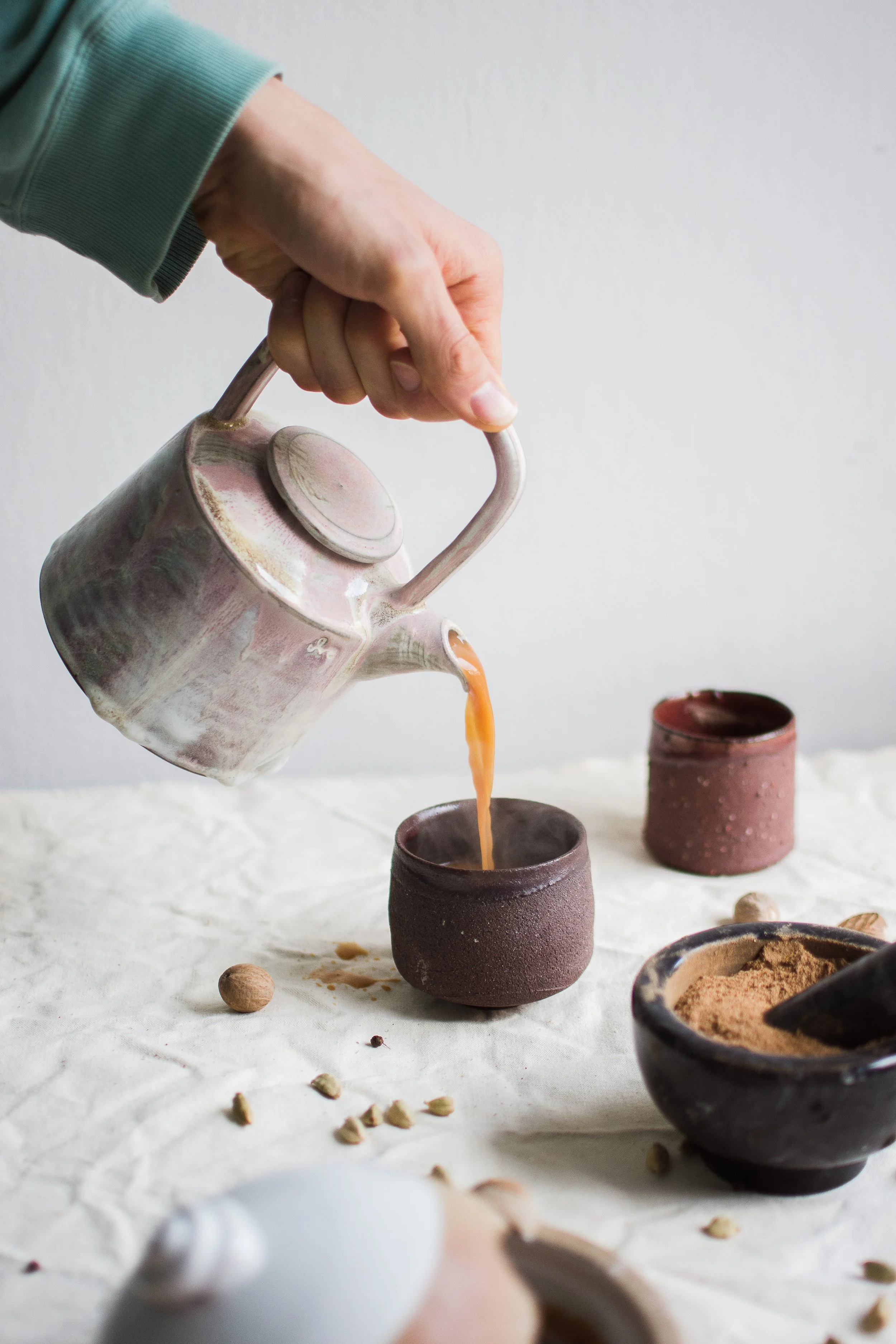
Looks like: pottery, square shapes, earth tones, low furniture
If lacking: anxiety, overwhelm, or feeling unmoored can surface
✧ Metal – Clarity, Precision, Focus
Brings: refinement, order, discernment
Looks like: round objects, white/grays, metals, minimalism
If lacking: mental fog, indecision, unfinished ideas
✧ Water – Flow, Depth, Intuition
Brings: ease, introspection, fluidity
Looks like: mirrors, curves, dark blues/blacks, actual water features
If lacking: burnout, emotional dryness, disconnection from self
A Daily Practice: Elemental Noticing
Feng Shui is most powerful when it becomes a rhythm — a moment of mindfulness folded into everyday life. Try this simple awareness practice:
⟡ The Five Element Check-In
As you move through your day, begin to simply observe the elements in your environment — not to judge, but to notice.
Wood: Do you see plants, natural materials, or green tones?
Fire: Are there candles glowing, warm light, or angular shapes like triangles?
Earth: Notice grounding textures like pottery, earth tones, or low, stable furniture.
Metal: Do whites, grays, metallic finishes, or minimalist spaces catch your eye?
Water: Look for reflections in mirrors, curves in form, dark blues, blacks, or flowing water features.
Use this quiet check-in as a mirror:
Are all elements present, or is one dominating? Is another missing entirely?
This gentle awareness can offer insight into where you may feel stuck, overextended, or in need of support. When imbalance shows up in your space, it often reflects something similar within. By consciously adding in the underrepresented elements, you invite subtle but powerful shifts — restoring a sense of calm, vitality, and alignment in both your space and your inner world.
Space as a Compass, Design as Intention
This isn’t about achieving perfect balance every day — it’s about noticing. Awareness is the first design tool. And when you treat your space as a living ecosystem — one that mirrors your nervous system, your habits, and your hopes — everything becomes easier to navigate.
Feng Shui doesn’t force change. It creates the conditions for it to arise organically. The right placement, color, or symbolic object can send your subconscious a message it’s been waiting to hear: you are ready.
The more you invite the elements in, the more your environment becomes a co-creator in your process — not just a backdrop, but a partner in your unfolding.